How to Get a Business Visa for the U.S.
Understanding the Business Visa for the U.S.
The United States is often perceived as a hub of business and innovation, attracting entrepreneurs, executives, and professionals from around the globe. To facilitate visits by foreign nationals intending to engage in business-related activities, the U.S. offers several visa categories. Among these, the B-1 visa is the most commonly utilized by individuals whose primary purpose is to engage in business activities such as meetings, negotiations, and attending conferences. It is vital to note that a B-1 visa does not permit employment or allow receipt of wages or salary from U.S.-based entities for services rendered.
Eligibility Requirements
Obtaining a B-1 visa involves meeting specific eligibility criteria set forth by U.S. immigration authorities. An applicant must convincingly demonstrate that their trip’s purpose aligns with the activities permissible under the B-1 visa category. This includes providing evidence of non-immigrant intent, which generally involves demonstrating a clear plan to return to one’s home country after the temporary visit. Non-immigrant intent can be shown through strong ties to the home country, such as ongoing employment, ownership of property, or close family connections.
Moreover, applicants must prove they have sufficient financial means to cover expenses during their stay in the U.S. without resorting to unauthorized work. Thus, documentation showcasing financial stability, such as bank statements, sponsorship letters, or an employer’s verification of financial support, is pivotal during the application process.
Permissible Activities
The B-1 visa grants visa holders permission to partake in specific business-related activities. These include but are not limited to:
– Negotiating contracts: Engaging with U.S.-based businesses to discuss terms or finalize business agreements.
– Attending professional conferences or seminars: Participating in gatherings related to one’s professional expertise or field.
– Consulting with business associates: Meetings with colleagues or business partners to discuss ongoing or prospective projects.
– Participating in short-term training: Attending training programs that are brief and related to one’s professional field or occupation.
It is essential to remember that any activity falling outside these areas might necessitate an entirely different visa type or category.
The Application Process
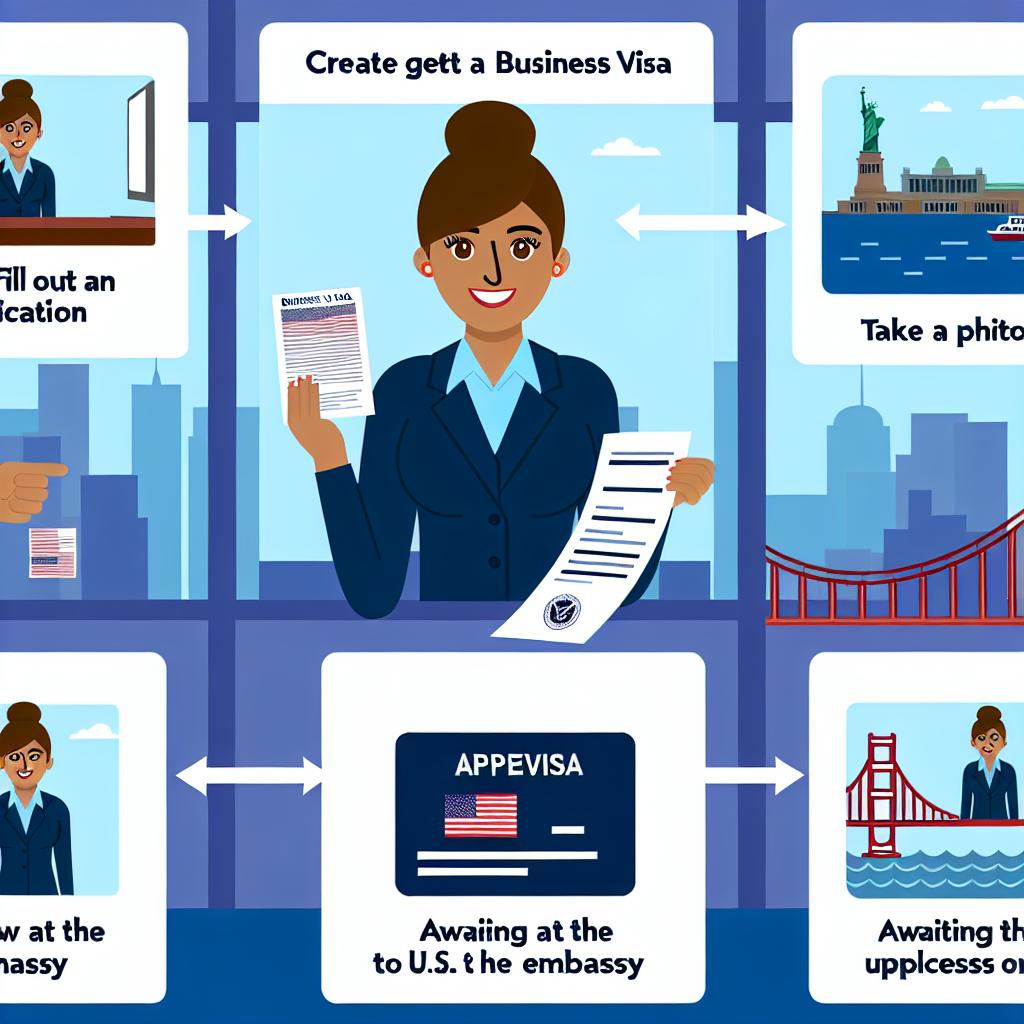
The process of obtaining a B-1 visa involves several meticulous steps. Here’s a detailed breakdown of what prospective applicants need to do:
Complete Form DS-160
The initial step requires filling out the Form DS-160, a standardized online application that must be completed through the U.S. Department of State’s website. This form serves to collect comprehensive details from applicants, including personal information, travel itineraries, and other relevant data that aid in processing the visa application. It is paramount to cross-check all entered data to ensure accuracy, as errors can lead to processing delays or even denials.
Pay the Application Fee
Upon completing the DS-160, applicants must pay a non-refundable application fee. Fee payment procedures, including approved payment methods and exact fee amounts, are available on the respective U.S. embassy or consulate website relevant to the applicant’s location. Keeping the payment receipt is crucial as it serves as proof of fee payment necessary for subsequent steps.
Schedule an Interview
Applicants, particularly those aged between 14 and 79, are generally mandated to attend a face-to-face interview at a U.S. embassy or consulate. Scheduling this interview promptly is advisable, given that waiting times for interviews can vary significantly based on location and time of year. During the interview, consular officers assess the applicant’s eligibility primarily through document evaluations and a series of targeted questions focusing on the applicant’s intentions and background.
Prepare Necessary Documents
Preparation is key to a successful visa interview, necessitating meticulous organization and submission of required documentation, including:
– A valid passport: It should remain valid for at least six months beyond the intended period of stay in the U.S.
– Form DS-160 confirmation page: Evidence that the application has been completed and submitted online.
– Application fee payment receipt: Proof of having settled the necessary fee required for visa application processing.
– A passport-style photo: Only needed if it was not already uploaded electronically while completing the DS-160 form.
– Proof of trip purpose: This could include letters of invitation from U.S. businesses, conference details, or any relevant documentation substantiating the necessity of a business visit.
Attend the Visa Interview
The interview forms a crucial component of the application process wherein a consular officer will establish the authenticity of the visit and the applicant’s qualifications for the business visa. Typical questions could cover aspects such as the purpose and agenda of the U.S. visit, employment status in the home country, and evidence of strong ties back home. Providing well-articulated and truthful responses increases the possibility of visa approval.
Visa Processing Times
After the interview, applicants should anticipate some processing time before receiving a final decision. This duration can fluctuate based on individual application circumstances, workload at the processing center, or seasonal factors. Consequently, it is prudent for applicants to apply well in advance of their intended travel dates to accommodate any unforeseen delays that might occur.
Further Considerations
Even after acquiring a business visa, entrants must comply with specific protocols upon arrival in the United States. It is the U.S. Customs and Border Protection officer who ultimately determines admittance into the country, despite visa issuance. Therefore, reflecting adherence to the U.S. Department of State’s travel guidelines is imperative to ensure a seamless and unhindered entry process.
In conclusion, comprehending and navigating the complexities of the U.S. business visa system demands thorough preparation and an understanding of stipulated requirements. Attentiveness to detail, compliance with guidelines, and well-prepared documentation can significantly bolster the likelihood of a successful application and a rewarding business venture within the U.S.